
Summary:
The article, written by Gregory Dunkel, highlights the stark reality that around 700 million people in Africa still lack reliable electricity – a direct legacy of colonialism and ongoing impact of imperialism. Today however, African nations are increasingly turning to low-cost Chinese solar technology to overcome this imposed underdevelopment. With solar and wind power requiring cheap, abundant inputs, Chinese renewable technology has become far more attractive than expensive, fossil-fuel-based systems promoted by the United States and its allies.
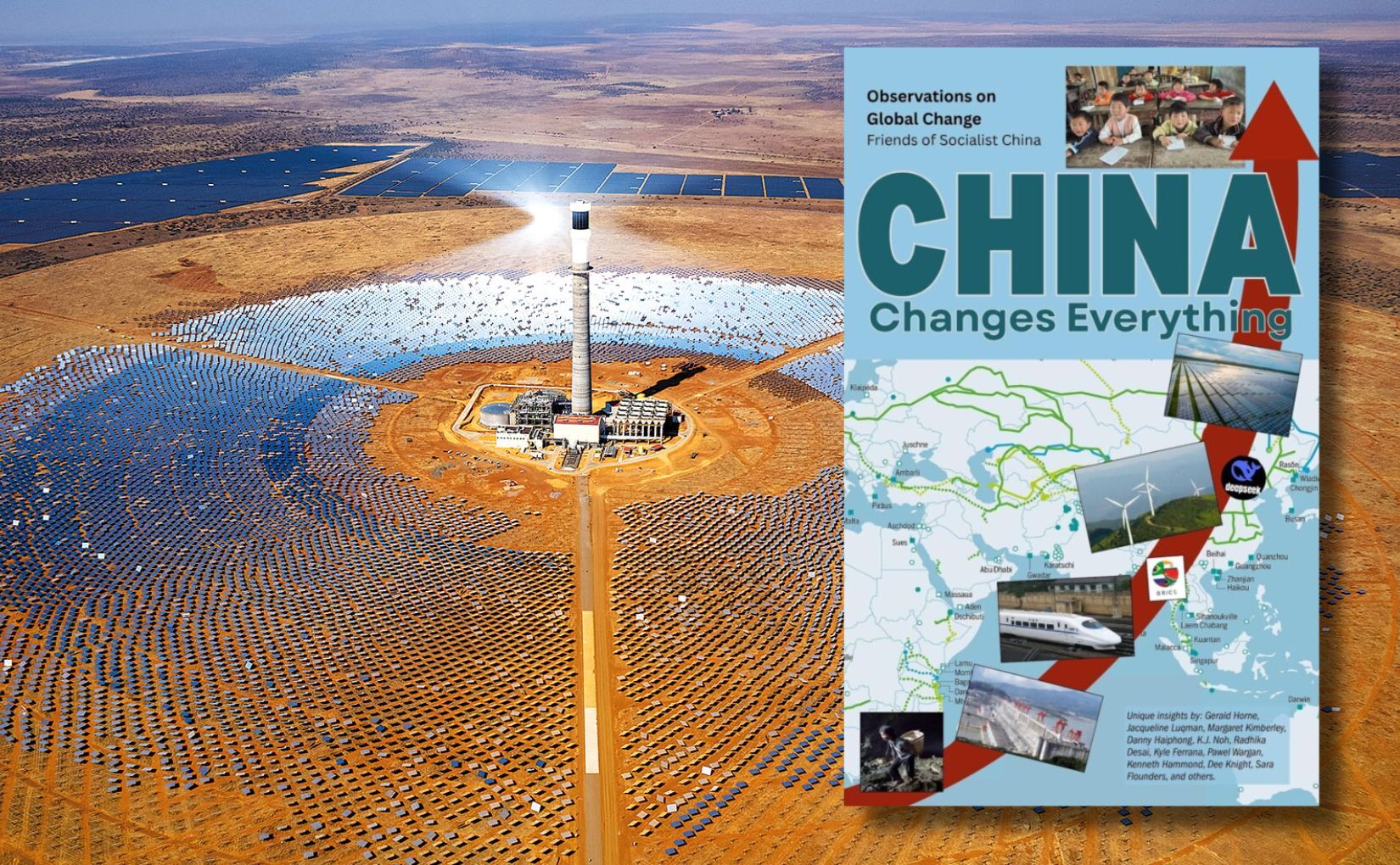
China’s state-led policies have driven massive technological advances and cost reductions in green energy in the last 15 years. “In May 2025, in a rush to take advantage of lucrative government subsidies, Chinese solar firms installed nearly a hundred gigawatts of new solar capacity domestically — more than any other country had installed in all of 2024 — and set the world record for the most solar installations in a single month.” Dunkel writes that China is on track to account for over half of all the world’s renewable energy capacity by the end of the decade, and furthermore dominates the global photovoltaic supply chain.
The author highlights the example of Chad:
Currently, only 6.4% of Chad’s population has access to electricity. The government of Chad is planning to raise its electrification rate to 30% by 2027 and to 53% by 2030 using inexpensive Chinese solar panels. It plans to build a solar park in N’Djamena, its capital, with batteries to store power for nighttime access.
Outside Africa, similar green energy transformations are happening in Cuba, where Chinese-backed solar projects could soon eliminate blackouts, and in Pakistan, where households and mosques are adopting Chinese panels at a world-leading rate.
The article concludes that China’s renewable energy leadership is now indispensable — both for global climate solutions and for helping formerly colonised nations break out of centuries of enforced poverty and backwardness