7·
2 hours ago
Ahh, I see where you’re coming from. I was meaning to reply more to OP’s comments on the in-the-moment experiences of hiking as opposed to the article talking about the ramifications that the hobby can have outside of that
There’s a reasonable disticntion to be drawn between tourist areas and areas that are just a bit wilder / grander / less-accessible, surely? The two categories can overlap, sure, but they’re not the same thing
Somewhat besides the point of the conversation, that’s a really nice photo. I normally feel like my cheap phone’s camera is good enough with a bit of creative usage, but stuff like that lovely narrow band in focus really shows what it can’t do
Nice work! I do agree that there’s a great deal of interesting stuff in less visually-appealling places, but I wouldn’t want to tell someone that there’s no value in bearing witness to natural beauty on a grander scale than what can be found behind a warehouse
Well actually your body does, as we begin to enter into a cardio workout state our brain releases drugs making us feel good and encouraging us to exercise more and push harder.
That’s not an absolute in any way, though. If it was, you’d have the same issue on any walk and you’d just wind up sprinting through the forest or local park or whatever as fast as you can because that too is a physical challenge
This is a very obvious aspect of 99.99% of hikers to me?
I don’t know what it’s like where you are, but that’s definitely not my experience. Across both my personal friends and family and random people I bump into while out and about hiking myself, there’s a broad mix of the kind of people you describe and people who are doing it in a much more relaxed and casual manner. Why do hiking groups push harder? I don’t know, I only ever go either by myself or with friends and family. To borrow the term instrumental play, such instrumentalisation is common across many hobbies. If you start playing a videogame then the online lobbies might be sweaty as hell, but that doesn’t stop you playing it casually so long as the game gives you plenty of stuff to do and engage with that doesn’t require the online lobby. A lot of people will be playing that game much less instrumentally, but they may be much less visible. I would argue that a mountain or similar does, in this analogy, generally have plenty to engage with other than physically testing yourself
Some of this seems quite strange to me. I hope you don’t mind me asking a bit about it / challenging some of it
Regarding the balance of physical exertion vs awareness of the natural world around you: with the exception of seriously gruelling climbs, surely nothing stops you from climbing a mountain or otherwise going on a tougher hike at the same slower pace that you describe enjoying? I certainly don’t hurry up mountains when I climb them. I take detours if I see something interesting, stop to watch wildlife if I see it, break for lunch when I find a nice viewpoint (and take all litter with me, of course). It does indeed take me a lot longer, but there’s nothing wrong with that, I just have to account for it when I’m planning. What you’re describing seems to me more like going for a run through a local forest than going for a pleasant walk through it. Sure, there’s no way to do Everest casually, but Everest is not what most people who consider hiking to be a hobby they partake in are usually doing
“…but why did I need to come here myself when so many others already have? With video cameras, cameras, notebooks… leaving trash and human impact everywhere on one of the most unique spots on earth with all the gear one could imagine. Am I exploring or trampling?”
I don’t think that videos and photos can meaningfully replace the experience of being somewhere yourself. I’m sure you would not consider photos of your local forest to be a replacement for your walk in that forest. It is absolutely worthwhile and important to consider the impacts of going somewhere, and if someone cannot go to a place without vandalising it then they probably should not go, but that doesn’t invalidate the power of a personal experience
Within me is not a hierarchy of landscapes
With all due respect, there is. You’re not advocating for walks around industrial estates or by the side of a busy road or just doing laps of your own home. You’re right that there’s a great deal of good to see in places that are less obviously notable, and also that many people miss out on that good by failing to consider it, but I don’t think we do anyone any favours by pretending that there’s no such thing as a more interesting landscape
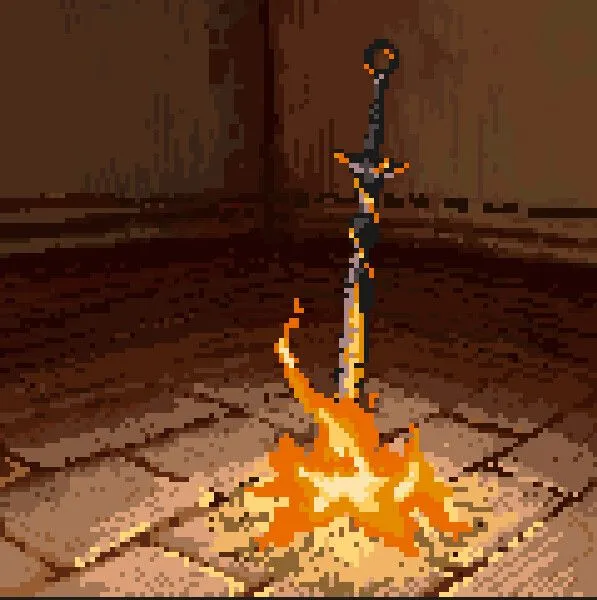
You know what, if that’s what gets us more Bloodborne, fine. Has anyone watched any of Jacksepticeye’s short films? I don’t really know anything about him other than that he’s a videogames youtuber
Look it’s by no means wrong or unjustified to make fun of Trump, to make fun of that AI rubbish he posted, to make fun of what I will generously call his defence, or to call out the various and many crimes that Christianity has been used to justify
But there is no fucking way that a brand new account with that name posting this is not trying to pick fights

If there was an effort to change them before, Orban would have vetoed it

Eigg, hatched a plan, well done headline writer
Fantastic project! I’ve heard a bit about the things they’ve worked on, but not this one, so thank you for sharing it
Also it looks downright tropical in that photo, but I bet it did not feel tropical at the time
Top left: Tomio Okamura, leader of a Czech political party
Top centre: Kaja Godek, leader of a Polish activist organisation
Top right: József Szájer, former Hungarian MEP for Viktor Orban’s party
Bottom left: couldn’t find this one
Bottom centre: former Hungarian MEP
Bottom right: Grzegorz Braun, Polish MEP
They are all, of course, bigoted shites
It’s using a pre-existing golf course
It’s fun nailing the timings of those. “Oh, he’s doing that big grab to piledrive me. If I dodge through it, there’s just enough of a recovery animation to get a flask in”. Like, get fucked, warrior demigod twice my height, you whiffed and I just stood behind you sipping some refreshing juice
I wonder if a shift of tone could work for a slower one. Something more akin to Journey or Shadow of the Colossus where it gives you a bleak and lonely beauty rather than the decaying misery of once-great things that FromSoft tend to do. Keep the Soulslike gameplay of course, just present boss fights as laying wonderful but troubled things to rest instead of slaying gods and demons to take their place
That damage-over-time effect does so much to stress you out and make you look for a healing opportunity that he is absolutely not going to give you
China has easy access to Russia, but it was also a major buyer of Iranian and Venezuelan oil. Can the Russian pipelines scale up to cover that at short notice?
Estimates for China’s strategic reserve seem to be 1.3 billion barrels, which is about three or four months of imports. That’s not very different to the EU requiring members to have 90 days in reserve
To be clear, I do not think that China is about to collapse over this or anything like that. It’s a functioning country with a generally competent government. I just think that the (implied) assessment of China being functionally isolated from the pressures you describe Japan and the EU facing is wrong
Money is only useful if people trust that they’ll get what they expect for it. A government can make a nationalised bank take a decision like that, but who’s going to use that currency if the government just snaps its fingers and makes 100 trillion yuan of everyone’s money disappear?
because they are massive net importers of petroleum
So is China, it imports more oil than any other country by a fair margin and as far as I can tell a bit more than the EU27 collectively do as well