

11·
29 天前As much as I hate Tesla, elderly drivers are notorious for flooring the gas when trying to brake. She’s ancient at 90, which is likely the cause.
As much as I hate Tesla, elderly drivers are notorious for flooring the gas when trying to brake. She’s ancient at 90, which is likely the cause.

But botulism shouldn’t grow that quickly right? Even in ideal conditions it should take days to grow, and salmon should only be briefly thawed and then cooked.

That seems high per https://www.mayoclinichealthsystem.org/hometown-health/speaking-of-health/are-you-getting-too-much-protein
Which quotes 0.8 g/kg
It’s also not really an accident either. Their popularity is not fully natural.
All these companies, Twitter, YouTube, Facebook, tiktok, reddit, etc are not apolitical entities, they gain by pushing right-wing content to certain demographics of vulnerable users.
I’ve noticed that personally I can’t use algorithmic media like this because it will shove that content like that down my throat and I refuse. But not everyone has that self-awareness and introspection. And some of the content is really subtle, not enough to be noticable at first.
Obligatory “wine is not an emulator”. So…

I mean yes, but let’s be honest. Most Americans are eating a lot of protein in the form of meat and dairy. So if you take a typical American diet and remove protein I’m not surprised it’s healthier.

I had a similar experience. I never like macadamia nuts until I tried some when I was in Hawaii, it was a revelation that I learned macadamia nuts could be good, especially the chocolate covered ones.

No, the requirements to run a locally hosted flagship llm is on the order of a Terabyte of vram, like Deepseek v4. The best models from openai and anthropic are likely similar. These are usually loaded into vram on one machine that can serve many users
But if you tried to distribute the compute, if it’s even possible, would take like a hundred high end gaming computers and process at a glacial pace. It just doesn’t make sense.
It makes more sense for an organization to purchase their own hardware and distribute resources somehow, like for a University, but consumer hardware won’t really cut it.
You could use smaller models, but their performance scales with size so they are much dumber than the flagship models.
Definitely it’s gonna vary by person, by a lot of it is about approach.
It’s still always going to be better to ask someone if they want you to complete a specific task, rather than what you can do to help.
This also probably varies by culture as some people are not comfortable saying no to offers of help, even if they don’t want it.
Everyone is different, and everyone has different experiences, so definitely be mindful of all of these things in how you approach this.
That being said, many American men in particular seem to be guilty of this lack of thought, thinking they are be useful by offering help but not realizing that managing them is its own task. Or worse, and and not offering help at all, and defending it by saying things like “well you never asked for help”.
This is not quite universal! My wife in particular does not like assigning people on how to help her, as that is additional cognitive load on how to make someone useful to you, she much prefers people either stay out of her way, or help by just looking with their eyes and see what needs to be done.
Do agree they need to know what they are doing too, having someone who doesn’t know how to chop veggies the way you like them and just start doing is definitely no good, but after sometime cooking with your partner you should know what needs doing and how to do it.
Nah, cooking with my wife is great. And it’s best when neither of us necessarily has to delegate tasks. Figuring out which tasks need to be done and and which order can sometimes be a huge cognitive load! That’s why if you ask someone what can you do to help they might get mad, you’ve asked them to take on the mental load of how to make you useful.
Instead a much better approach is too look at what they are doing and think for yourself what needs to be done! Uncut veggies that need to be chopped, ask if they want you to chop the veggies. Dishes piling up in the sink? Ask them if they want you to clean the dishes. Are they making something that needs boiling water, like pasta or potatoes? Go ahead and get a pot of water boiling. It’s much better for someone helping to not just complete the task, but to identify it too.
With my partner we often swap between different styles, if it’s something she wants, she’s in charge but I still try to find ways to help without her asking to do it. Other times the roles are reversed and she’s helping me. For big events like Thanksgiving, we are both overwhelmed and will often know what needs to be done and just do it, no one’s in charge, we are approaching this like a team.
If your partner never wants you in the kitchen, it’s probably because you’re useless and have to be babied to handle the simplest of tasks. (Which is not always bad, not everyone can cook, but everyone should be able to do dishes!) Or in a really small kitchen where there just isn’t space.
But the same is true if you are a guest, my friends have gotten pretty good at seeing what needs doing and will just do it! Helping with the dishes, setting the table, making cocktails, etc. Making themselves useful without adding to someone’s cognitive load that is hosting people or making a meal. However it is very frustrating when a guest who is not familiar asks how they can help, they don’t know where anything belongs, so they cannot effectively complete any tasks without being micromanaged, including dishes, because some things can’t go in the dishwasher and they won’t know what those are! The best things guest can do in these scenarios is usually to bring already made items, like drinks, or prepare them ahead of time, or only need widely available appliances to finish, like 10 minutes in an oven to brown a casserole.

For this kind of study, we are really not that much different from mice.
We share 80% of our DNA with mice. We share many similarities in our immune systems, brain, and yes even gut.
The study uses mice to try and find a mechanism of ageing in humans, and they test their theories on mice. They do find a mechanism! It is rather unlikely that the mechanism they find does not apply at all in humans.
If we didn’t use animal models to try and understand human biology our models, medicine, drugs, etc would be far far worse.
For example see: https://www.blood.ca/en/research/our-research-stories/research-education-discovery/why-do-scientists-use-mice-medical
And? From many biological perspectives mice are rather similar to humans. And very easy to test these kinds of things. Not everything will translate 100%, but more often then not they are useful.
Nah, apartments are supposed to be great. For one you can buy and own apartments.
Renting is supposed to be a viable alternative to houses. The tradeoff is supposed to be slightly more expensive, but no worries about any kind of maintenance, and higher flexibility about moving.
The reason this whole equation is so fucked is because we don’t have enough apartments (really all housing) to house everyone where they want to live, so purchasing or renting housing is obscenely expensive.
And the main problem stems from zoning

Well kinda
It depends on the number of sales, but for the deal that was made, 0 sales nets them as much as 12 million!
Only after 12 million sales do they come out of the red.
A lawsuit forced krafton to rehire the fired devs, and extended the the payout period based on sales.
So ironically, for maximum hurt for krafton, you should buy the game to force a larger payout.
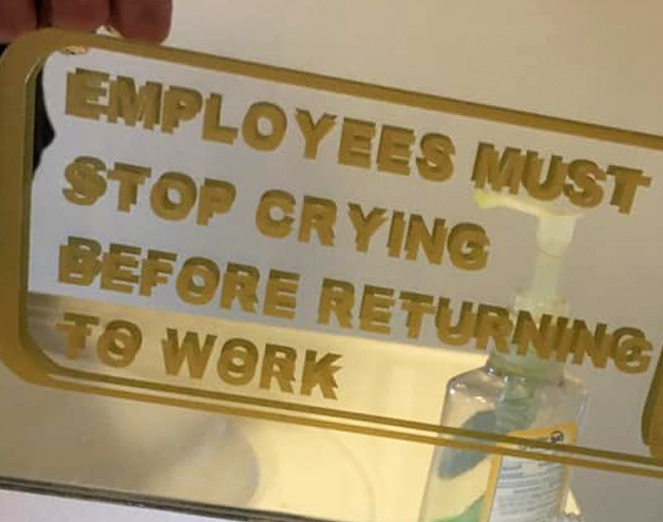
Where are they gonna go? We destroyed most of our third places, or made them so expensive to extract maximum profits.
Dinner is expensive, movies are expensive, small friendly local shops have been disappearing in favor of sterile corporate ones.
For a lot of people the only option would then be a home, which doesn’t work great for a lot of reasons.

Before, New York City was highly subsidizing the rest of the state, paying proportionally more and receiving less. So this is balancing more the way it should be.

I bought a ps5, and like what exclusives?
Since 2020 I bought like 6 games? (At least ones that aren’t remasters)
Horizon forbidden West, god of war Ragnarok, ghost of yotei, GT7, Spider-Man2, and returnal.
Of these only 2 are still exclusives.
Not great value for a ps5, I thought I’d be buying more single player exclusives but there just aren’t that many.
Even if Sony locks down future titles to being exclusive, they are not making enough to justify a console over a pc.



That’s not a good thing. Road freight being subsidized means it gets unfair advantage over more efficient transport when it makes sense. So taxes are being used to subsidize inefficient means of transport, at least some of the time.
Making freight pay their share would make them examine how to be most efficient, instead of not caring since they don’t pay.