

Onno (VK6FLAB)
Anything and everything Amateur Radio and beyond. Heavily into Open Source and SDR, working on a multi band monitor and transmitter.
#geek #nerd #hamradio VK6FLAB #podcaster #australia #ITProfessional #voiceover #opentowork
- 167 Posts
- 1.61K Comments

 281·3 days ago
I’ve been “programming” for over 40 years.
In many ways, if not all, it’s like creating art.
Perhaps it’s best explained by saying that what I do is translate ideas into ephemeral castles constructed of notional bricks written in imaginary languages and presented to an audience with little or no understanding of the fragility of the whole piece.
It’s also what pretty much runs our world, from water filtration through food production, space exploration to shopping, transport and telescopes, research and recreation.
Programming is the first tool that humans came up with that allowed us to explore ideas too large to fit in our brains and even now, being overrun by Assumed Intelligence and Unsupervised Text Extruders, it’s still the most exciting part of humanity.
 5·10 days ago
I wonder what the global reach is for those two companies, much of the online world appears to ultimately be powered by them.
We need alternatives for everyone.
 11·12 days ago
Australia really needs to embrace this approach.
 241·14 days ago
In many ways a vending machine is precisely that.
AI generated SPAM is beginning to leak through. It’s getting pretty personalised and harder to distinguish from real email.
What does the future of this look like?

 5·16 days ago
Why are these batteries not called 11Ah batteries?
 3·16 days ago
Congratulations on passing your test.
While this might be important to you, this is not News, nor is this a news article with a source reference.
 1·16 days ago
It always was.
 7·17 days ago
I moved from VMware Fusion after a hardware failure and migrated to Proxmox. I use VMs to isolate client information and to test and use different OS versions and distros.
I have a VM that runs Docker and connect to it via SSH for running applications I don’t want to install on my main workstation.
My main workstation is also a VM.
I came from bare metal Linux for years and found that I spent too much time recompiling kernels to make it work with my hardware.
Now that everything is a VM, changing underlying hardware, and even hypervisor is trivial.
If VMware hadn’t been bought by Broadcom and allowed me to virtualise x86 on Apple Silicon, I’d still be running VMware Fusion. UTM by the way is completely unreliable … I really tried.
As it is, I’m running Proxmox on AMD.
in summary, Proxmox allows me to build what I need when I need it virtually and it’s running on a standard Debian host.
Edit: #$#__# autocorrect (unreadable -> unreliable)
 1·20 days ago
A real life version of this I’ve experienced myself is calling the Lyons Hearing Institute to book an appointment for a hearing test and having to deal with a poorly recorded IVR telephone system.
 2·20 days ago
TIL that all of the Flight of the Conchords episodes are on Wikipedia!
 32·20 days ago
This is not limited to CompSci graduates and gets worse the older you get.
It’s also not limited to CompSci.
I wonder if you got the same answer, cats are mercurial like that.

I asked my cat …

I cannot count the number of times this exact phenomenon has happened to me when parking my car in an empty carpark.
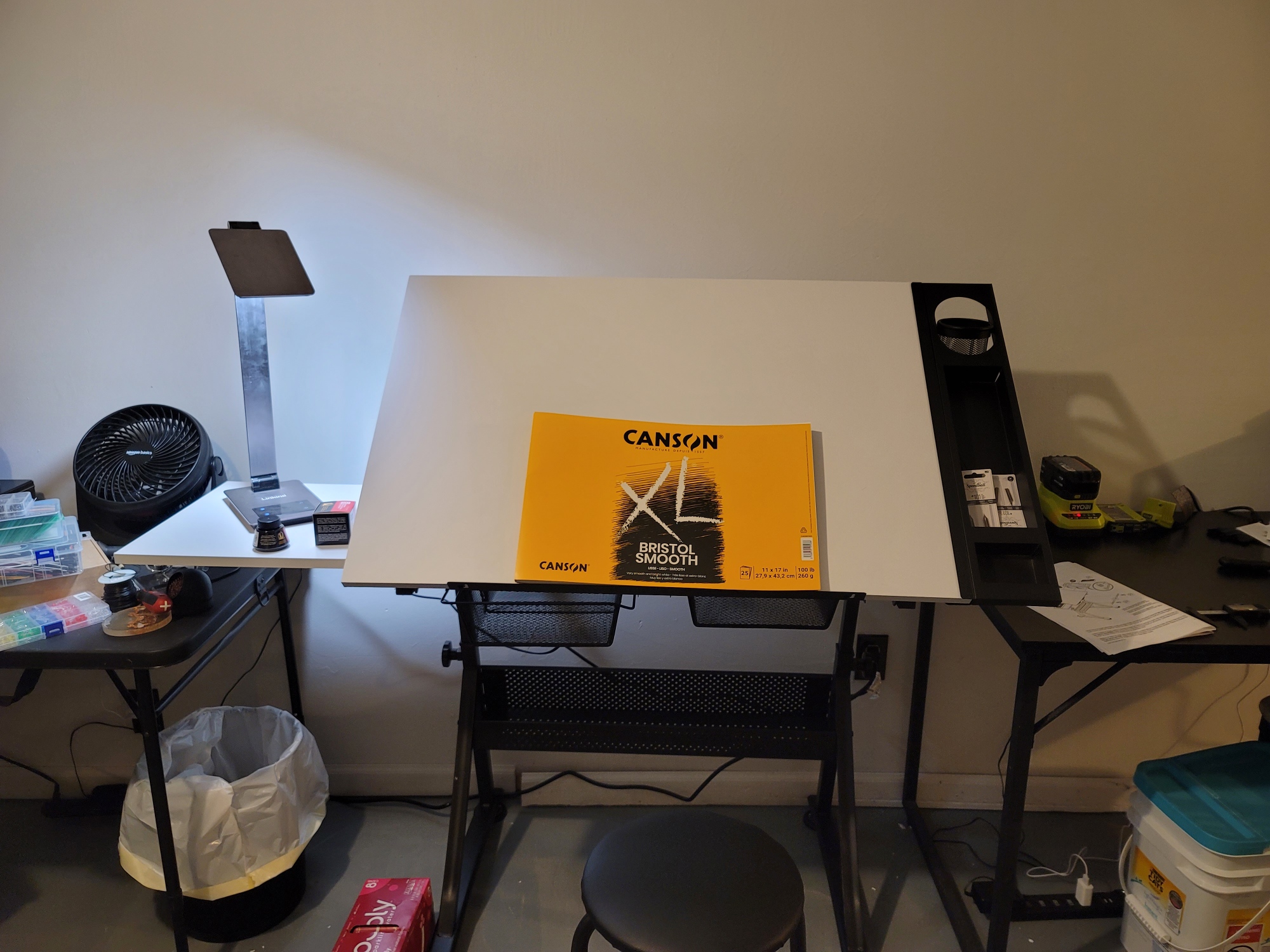
That’s very interesting and helpful. In light mode it’s normal.
Edit: And if you toggle Dark mode, it stays readable, but the navigation buttons go white until you open the keyboard.
Edit: Hmm the toggle fix only worked once and navigation stays white on white.

How is your code sample for an object any different from a function definition?
In both cases you need to read the documentation, consult the source, or have an IDE that does.
That depends entirely on how the object is constructed. Plenty of implementations use object.new() and you’re expected to fill in the blanks.
Besides, even if you have a constructor that takes parameters, it’s essentially the same as calling a function. Get it wrong and stuff breaks.
Thank you. I’ll lodge a bug report in the morning.


Yes.