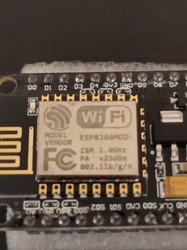
I am looking to build an alternative laptop to AMD/Intel. I want to limit how much I support them and protect my privacy.
I have thought about getting the Framework Laptop 13 chasis with expansion cards and use RISC V for the main board.
Debian is in the lead for the OS.
Are there any other alternatives that could be recommended that may be even better?
You must log in or # to comment.
buy used laptop
Check out Starlabs - their laptops have Intel processors but use Coreboot as the BIOS with the intel management engine disabled. They’re good with spares and are designed to run Linux. I have one and it runs Debian 13 flawlessly.
I love the love for Debian!!
What if it were AMD/Intel but with FOSS firmware? rms uses a ThinkPad x200 with GNU Boot.
Otherwise I don’t know how mature RISC V laptops are if they even exist.
In China they have the Kaihong BotBook which runs OpenHarmony (Apache v2 license) and has an ARM processor. I don’t know if importing let alone using an open source OS more obscure than GNU+Linux is an option for you.
Lots of open hardware here https://shop.mntre.com/products/mnt-reform
They are on the fediverse if i recall.
Found them! https://mastodon.social/@mntmn
You’ll still be running into frequent issues if you go with R-V, so be warned.
That being said, the Framework R-V board only comes for the 13" format, so you can buy a cheap Framework 13 refurb from their store (fully warranted and everything), and swap the board out for the R-V for $200.
There are other R-V laptops out there, but I think the build quality is nowhere near the Framework, AND if you feel like it sucks, just swap that board back with the one it shipped with.
Also good to note: RiscV is not open hardware, it is an open architecture.
The CPU’s/MCUs made with RiscV are still 99% proprietary and they can put just aa many backdoors into the devices as they want with little no no oversight, arguably less because you have orders of magnitude less external bug and penatration testers.
Definitely in support of RISC-V because like AV1, open standards are the first big step, but it is good to note that “security” may or may not be better as well as the company behind it.
Your best bet is to probably look into a snapdragon laptop. Based on everything I have heard, RISC V is going to be rough going. Some folks have also converted raspberry pis into laptops, but I imagine the build quality will be much more janky than an OEM laptop.
Also, depending on your philosophic outlook, would buying a used laptop count? You are not really supporting the CPU maker or laptop OEM, as you are using hardware which was already sold, and reducing e-waste in the world.
Lastly, I am trying to understand the meaning behind “protect my privacy.” Is there something less private about an AMD or Intel CPU, even if you have Linux installed on it, or is that covered by the Linux part?
IME maybe? But coreboot can solve those things.
That was my first thought about the IME, but I wasn’t sure. I guess that is what I am trying to understand.
“Protect my privacy” is really my overall philosophy with ANYTHING tech-related. It’s more being extra cautious/paranoid than anything else. The hardware itself supposedly doesn’t track you, but I still don’t 100% trust either side of the duopoly. Better safe than sorry. 😅
That’s fair, but come to think of it, the architecture of the CPU doesn’t really say anything about privacy. Someone can build an RISC-V chip but sneak in telemetry, or you can build yourself a x86_64 CPU and be 100% no telemetry. It’s about the manufacturer, not the architecture.
I don’t think you can ever be 100% sure that the CPU you’re running on is telemetry-free unless you have those kick-ass X-ray machines and examine it yourself. Building your trust on top of something else you deem trustworthy though, is practical. Billions of people are running Intel/AMD off-the-shelf CPUs, and there are perhaps millions specialists in them, what is the chance that a backdoor remains hidden?
The same goes for software. How do you know Linux kernel, OpenSSL, Wayland is trustworthy? Because many people use them, and it’s unlikely a backdoor is there. Think about the sheer amount of software the CPU runs. Don’t you think we shall have a greater concern there?
Hopefully this calms your paranoia about hardware a bit.
That is fair enough. Have there been any findings that CPUs are sending telemetry of some kind, or is it more the idea of there possibly being some back door for governments to use?
I guess for me personally, my threat model for privacy is more towards foiling corporate data harvesting wherever possible, but I have resigned myself to the realization that making a computer nation-state-proof is borderline impossible without unreasonable levels of effort, especially for a normal computer user like myself.
There’s also a Raspberry Pi laptop: https://www.jeffgeerling.com/blog/2026/the-first-good-raspberry-pi-laptop/
Can someone explain for us people at work who cant watch a video?
Framework used cheap batteries that died after two years. I got one. It died after two years. They refused to help. Therefore, I wouldn’t trust Framework to actually stand behind their products, and I wouldn’t trust them to use good quality parts.
It sucks because the thought that I could upgrade in the future is the only reason I paid the astronomical price for this thing, and now there’s no way I’m going to buy anything else from them.
They also support DHH, who is a white supremacist.
Wayyy too many Nazis in tech, which unfortunately includes a surprising amount of open source tech too.
Thanks
I’m pretty sure the MNT Reform is the closest thing we got to a laptop built on open hardware.
Unfortunately, it is pretty chunky 😅. Thankfully, their upcoming MNT Reform Next has become production-ready recently. So, that’s pretty lovely if you’re willing to be patient.
Do you need a new laptop right now? I’d advise to stay with what you have and wait for risc-v to mature a little more
Do you genuinely think that’s going to be soon?
Seem that I’ve been hearing about mainstream RISC being “just around the corner” for around three decades.
Well, there are already a couple of prototype laptops out there and there’s a growing geopolitical pressure for investing in alternatives to usa tech. I’d not be surprised for a robust release appears in a few years. Besides, op seems to prioritize moving away from amd/intel over other things.
TBH, for every day computing, I think a 10-15 year old laptop running Linux probably runs better than a current R-V board. Less efficiently probably, but in terms of responsiveness and normal measures of usefulness.
So genuinely, if you really wanted to avoid giving big tech more money there’s no real difference other than being able to say you absolutely don’t even use an x86 chip you hate big tech so much (which is based and I respect)
I’m that goof who built a desktop-shaped computer with the Milk-V Jupiter RISC-V (RV64GCVB) board last year. The performance was awful compared to recent amd64 setup. The amount of RAM wasn’t an issue, but the CPU was way to slow to even run a graphical interface (read XFCE), or compile some simple program in Rust. It’s equivalent to those arm926ej-s SBCs ten to fifteen years ago capable of running Linux 2.6, and only suitable for writing code in text.
I’d say give it two more decades, at current pace.
I was hoping to get something this fall. If I could get something this summer, that would be great but I know it would be rushing. If I decide on risc-v, it doesn’t matter. Because I would have to wait however long they make me. 😭
Stick a raspberry pi, display panel, keyboard and powerbanks into a briefcase.
Meets the very limited requirements you have listed.
Where do you live? Huawei laptops with Kirin chip sets and HarmonyOS might fit the bill. Not available in the US, but I was just looking at one at my local mall.
If money was no object I’d book a ticket to China and get me a MateBook Fold. Though whether HarmonyOS will work for me and whether GNU+Linux is supported are unknowns that make me hesitant if I ever had the money.
one of those snapdragon laptops plus linux for ARM maybe?
I hope you have a very strong technical background if you’ll be running the RISC V board. Its a development board. Expect lots of stuff not to work.