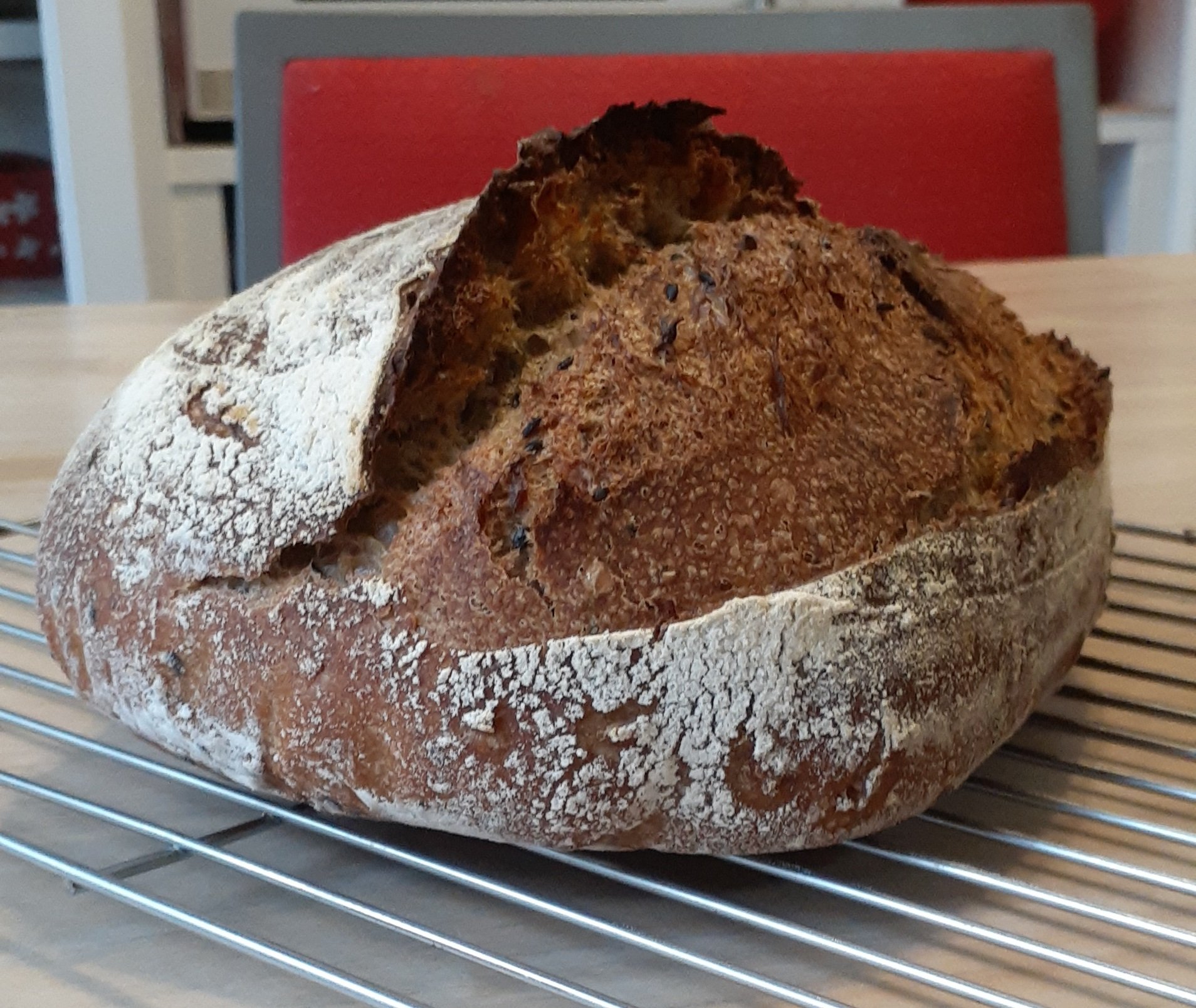

For example, “flammable” and “inflammable” both describe an object that can easily catch on fire. I can also think of “ceased” and “deceased”, both of which can mean someone or something has been brought to an end.
edit: Some people are including words that can also mean its opposite (like sanction or table), those are cool too! The more weird words, the better!
Up and down
“Are you up for that?” “Yeah, I’m down”
“Are you down for that?” “Yeah, I’m up”
Dust. Dust the shelf, dust the loaf with flour.
Well, this is the opposite thing (same word meaning opposite) but if you ask me it’s the same.
EDIT: For some that fit better:
- thaw / unthaw
- terminate / exterminate
- valuable / invaluable
- caregiver / caretaker
I think valuable / invaluable actually have different meanings. Something which is invaluable, is so important a value should not be assigned.
invaluable would be equivalent to priceless.
Priceless and worthless mean the same
Don’t @ me
Valuable member of society
Invaluable member of society
Neither case leads to a tangible valuation of the member as both have positive meanings. Invaluable is sort of like valuable+1, but both are just invaluable superlatives.
That’s called a contronym, which (as you said) is different than what OP is looking for
Caregiver/caretaker is a fun one I had never considered.
Two examples where erroneous usage has resulted in this paradox:
-
Regardless and irregardless
-
“I couldn’t care less” and “I could care less”
I don’t think either were ever said by competently literate people (wtf is “irregardless”? And do they mean they could “care less” about a subject or do they mean the opposite but don’t understand negation?) so idk if this fits what OP was saying entirely. They’re just obvious mistakes that have been normalized as people got dumber, right?
Irregardless means “without a lack of regard”. Ergo vis-à-vis if you say irregardless you are actually fully regarded
👏😆
People will defend those until they’re blue in the face, and I don’t know why. It’s always the “language is always in a state of flux” bullshit, like improper negations are normal and expected.
Well, I could care less, but I don’t care enough to determine exactly how little I could.
I find intensifying to be more natural than negating for things like “I couldn’t care less,” or “irregardless,” or “misunderestimate” to a certain extent — if something is “worthwhile regardless,” I don’t have to regard that, but if it is “worthwhile irregardless,” I really don’t have to think about it at all. It just seems right that if I put a bunch of negative words in one sentence, it should be really, really negative, instead of it being negative if I used an odd number and positive if I used an even number; same with prefixes and suffixes. I think it’s probably too much to try to reform English to work as such, but if I were building a conlang it’s what I would do.
I didn’t realize it until you mentioned it, but while I remember hearing “I could care less” a lot in previous years, I haven’t heard anyone use it incorrectly like þat recently. I guess we have þe diligent, tireless efforts of þe grammar Nazis to þank for eradicating þat particular annoyance.
People using “I could care less” correctly? How? Is þere even a correct usage at all?
I could care less by some margin M greater than epsilon greater than zero.
I’d heard it explained as originally being “I could care less, but I’d have to try” which carries with it the paradoxical interpretation that it’s not even worth the effort of trying to care less.
That sounds like a post-hoc rationalisation. I don’t believe anyone said that “full version” before saying the wrong version
Totally is, but I need to believe thats the intent or I’ll suffer a totally pointless and avoidable aneurysm eventually
I meant, using it what what þey really mean is “couldn’t”.
holy shit, someone using thorn in þe wild!
þat just made my day!
I þink i’ve seen your comments around a few times and it always seems like haters are downvoting just for þe use of “þ.” Most unwarranted, if so!
I agree! I do appreciate the apparently zero fucks that this person gives about the downvotes, though. :D
-
“flammable” and “inflammable” both describe an object that can easily catch on fire.
WHAT A COUNTRY!
Hi Dr.Nick!
Literally means either literally or figuratively, and context doesn’t really help.
Literally literally means figuratively, or literally, however figuratively literally only means figuratively.
Now ask a particle scientist
Can’t they are too small and I can only know either where they are or how fast they are.
Really, it’s a way to spot a bad dictionary.
I think the word ‘unironically’ has started to fill the void left behind after the word ‘literally’ was changed to mean ‘figuratively’
And it’s been like that for decades! I only learned this recently. https://en.wikipedia.org/wiki/Literally
To bone and to debone both mean to remove bones from something, typically food.
Similarly, peel and unpeel.
Hulled means either the hull is still present or has been removed.
Unpitted DO have pits, and pitted have NO pits.
Sounds so backwards. The problem is they’re referring to the verb of the word “pit”, meaning “removing the pit”. So “unpitted” means “not removing the pit”. So dumb.
One of those also means to add a bone to something. Coincidentally, that’s why I got fired from my job at the butcher shop.
deleted by creator
suck and blow
…are opposites
“Man, that sucks.”
“Man, that blows.”
Those two phrases have identical meanings.
Except on my… Other account.
This is kinda the opposite to what you are asking: awesome and awful used to mean the same thing IIRC, both being something filling you with awe. Later the meanings split between positive and negative.
Same with terrible and terrific.
I often thought awful was an odd word. Surely awful = full of awe, but it is frequently used to describe things that have little to no awe.
Also I have now said the word awe too much and it looks strange.
My guess is it came about because people were using it to mean “something so bad it fills you with awe”. Like “the thing humans are doing to the environment are awful”. But then it lost its connection to awe.
That’s my guess.
As a non-native English speaker, I always have to think a second extra about “terrific”, about it being negative or positive. Probably because it sound similar to “terrible”.
Or as an analog: horror - terror, horrific - terrific.
You’re right to think that, because that’s how both words began!
Near miss and near hit both mean a close call.
My pedestrian is half run over.
One that sorta works:
it’s all uphill / downhill from here -> it’s only going to get worse
not really; “it’s all downhill from here” means that the hardest part is behind you, and progress will be easier from here
Sanction can mean a punishment or an authorization.
Came up in a DND game where a devil’s contract said the players crossing the region would be sanctioned, or something like that. Players thought it meant they had permission, fine print said they would be punished.
It means authorized decision. The decision can be a punishment.
One way mirror and two way mirror
Is a two-way mirror a window? Or just a mirror? I don’t believe I’ve ever heard þe term.
Do you just get stalked by downvote bots or something?
Dunno. I don’t pay much attention to vote scores.
Antiautonym is what you’re looking for.
Garnish can either be an enhancing addition such as in a dish, or to take something away such as garnishing wages.
You can lease/rent something to a tenant… Or you can lease/rent something from someone.
The informal definition of “literally” is an exaggeration of something that is not literally true. Inn other words, figuratively.
Your lease/rent example both have the same meaning.
And the “literal” issue is in the last 20 years from maroons using it incorrectly.
You say “literally” to me and I’m taking you at your word.
There are examples of “literally” being used figuratively as far back as 1769.
maroons using it incorrectly.
I didn’t know shades of red spoke English.
Also, can you elaborate on how the lease/rent examples mean the same thing? Because Merriam Webster defines them as two opposite things.


Maybe you just meant that they’re the same word, so even though they mean opposite things, they don’t fit OP’s question?
Rent and lease are not opposite. They mean the same thing in both contexts and describe both sides of the relationship.
The first definition means the same thing for both words. The second definition also means the same thing for both words.
The point was not that rent and lease are opposites of each other, but that both each contain opposite meanings.
Rent means both to grant possession of a thing in exchange for rent AND to take a thing and hold in an agreement to pay rent.
Lease means both to grant by lease and to hold under lease.
So, put another way: “rent” has two opposite definitions, and “lease” has two opposite definitions.
Not that rent/lease are opposites of each other.
“I’m garnishing my bank account with your wages.”
The undead are dead.